
Composite Filling in Gurgaon — Tooth-Coloured Cavity Treatment From ₹2,000
✓ NABH-Accredited 4 Branches ✓ Tooth-Coloured Aesthetic Match ✓ Single Visit Procedure ✓ Lasts 8–15 Years ✓ Dr. Ahlawat — 35+ Yrs
If you're searching for composite filling in Gurgaon, you want a tooth-coloured restoration that blends perfectly with your natural teeth — without the metal look of old amalgam fillings. At Muskaan Dentals, composite fillings are placed by Dr. Suresh Ahlawat's team across 4 NABH-accredited branches. Composite is the most aesthetic and versatile filling material — bonded directly to the tooth, sculpted to match your bite, and cured with a special light. Composite fillings start at ₹2,000 for single-surface restorations and last 8-15 years with proper care. Single visit, 30-60 minutes per tooth. This page covers when composite is right for your case, costs, the procedure, and how it compares to GIC fillings.
Quick Summary — Composite Filling Gurgaon (Muskaan Dentals)
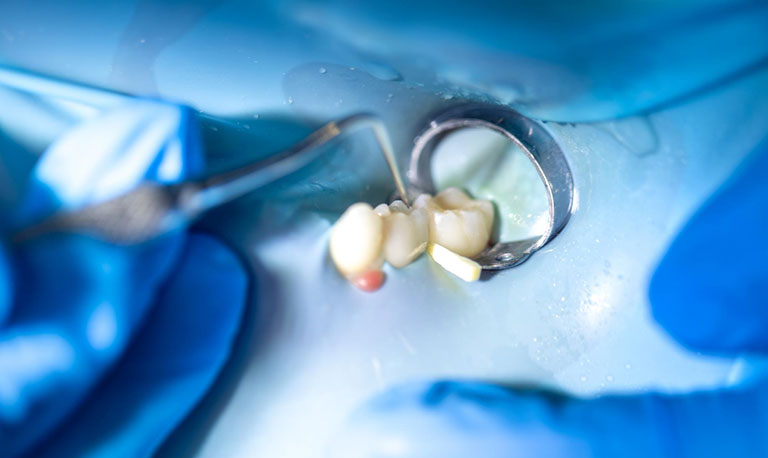
Composite filling (also called tooth-coloured filling, white filling, or resin filling) is a modern dental restoration made of a mixture of plastic resin and fine glass particles. It's the most aesthetic and most popular filling material in modern dentistry — closely matching the colour, shine, and transparency of your natural tooth. The dentist applies bonding agent to the prepared cavity, layers the composite material, shapes it to match your bite, and hardens each layer with a special blue LED light (light-curing). At Muskaan Dentals in Gurgaon, composite fillings start from ₹2,000 for single-surface restorations, with multi-surface fillings ranging ₹3,500–₹6,500. Lasts 8-15 years with proper care. Single visit, 30-60 minutes per tooth. CGHS, ECHS, ESIC, Ayushman Bharat covered. Suitable for front teeth (best aesthetics), back teeth (with good strength), chipped teeth, and minor cosmetic corrections.
₹2,000+
Single-surface composite filling
30–60 min
Per tooth, single visit
8–15 Years
Lifespan with proper care
Aesthetic
Best tooth-colour match available
What Is Composite Filling and How Does It Work?
Composite filling is a dental restorative material made of a synthetic resin (BPA-free in modern formulations) reinforced with fine silica or quartz glass particles. The material is supplied as a soft, putty-like paste that hardens (cures) when exposed to a specific wavelength of blue LED light — within 20-40 seconds per layer. This unique property allows the dentist to sculpt the filling exactly to match your tooth's shape, bite, and natural contour before hardening it.
Modern composite is sometimes called "nano-composite" or "nano-hybrid composite" — referring to the ultra-fine particle technology that gives it superior polish, wear resistance, and natural shine. The latest generations can be polished to a smoothness indistinguishable from natural enamel, and the wear rates have improved dramatically over the past 15 years.
The Three Key Advantages That Made Composite the Modern Standard
- Aesthetic match: Composite comes in dozens of shades and translucencies. Your dentist matches the exact colour and light-transmission characteristics of your natural tooth — the result is invisible. Most patients can't tell which tooth has the filling.
- Bonding to tooth structure: Composite bonds chemically to enamel and dentine through an etching and bonding system. This means less drilling is needed compared to old amalgam fillings (which required the cavity to be cut into a specific shape to "lock in" mechanically).
- Versatility: The same material is used for cavity fillings, repairing chipped teeth, closing small gaps between teeth, and reshaping teeth cosmetically — making composite the most flexible restorative material available.
The Trade-Offs (Honest Comparison)
Composite is excellent for most cases but has some limitations:
- Moisture sensitive: Requires a dry working field during placement. Saliva contamination can compromise bonding. This is why composite is harder to use on children, elderly with reduced saliva control, and patients who can't keep their mouth open without moisture.
- Slightly higher cost: Composite costs more than GIC due to the longer placement procedure and material price.
- Setting time: Each layer needs light-curing (20-40 sec), and large fillings need multiple layers — so the procedure takes longer than GIC (which sets chemically in 5 minutes).
- No fluoride release: Unlike GIC, composite doesn't provide additional fluoride protection.
At Muskaan Dentals, your dentist chooses the right material based on your specific case — sometimes composite, sometimes GIC, sometimes a sandwich technique combining both. We explain the reasoning honestly so you understand why a particular material is recommended for your tooth.
When Composite Filling Is the Right Choice
😁 Front Tooth Cavities
The best aesthetic match available. Composite is invisible on front teeth — even close-up. The standard choice for any visible tooth.
🦷 Premolars & Molars (Visible When Smiling)
Modern composite is strong enough for premolars and most molars. Maintains aesthetics for back teeth that show when you smile or laugh.
💔 Chipped or Cracked Teeth
Composite bonding repairs small chips, cracks, and worn edges. Often done in a single 30-minute visit without anaesthesia.
📐 Small Gaps Between Teeth
Closing small diastemas (gaps) with composite bonding — fast, reversible, and significantly cheaper than veneers or orthodontics.
🔄 Replacing Old Amalgam Fillings
Upgrading from old silver/grey amalgam fillings to natural-looking composite. Done one quadrant at a time, typically over 2-3 visits.
🧒 Adult Permanent Teeth
Composite is suitable for adult permanent teeth in patients who can maintain a dry field during placement. Excellent for young adults concerned about appearance.
🦷 Medium-Sized Cavities
Best for small-to-medium cavities. Very large cavities may need an onlay/inlay (lab-fabricated composite) or a dental crown instead for better strength.
👰 Cosmetic Touch-Ups
Reshaping pointed canines, smoothing slightly chipped edges, evening out tooth length — all achievable with composite bonding.

Filling Materials Compared
Composite vs GIC — Honest Comparison
Choosing the right filling material isn't about "which is best" — it's about which is best for your specific case. Here's the honest comparison.
| Property | Composite (Resin) | GIC (Glass Ionomer) |
|---|---|---|
| Cost (per tooth) | ₹2,000 – ₹6,500 | ₹800 – ₹3,000 |
| Appearance | ✓ Best — invisible | Tooth-coloured (slightly opaque) |
| Aesthetic for front teeth | ✓ Excellent | Good |
| Strength under bite force | Good | Low-moderate |
| Wear resistance | Good to excellent | Moderate |
| Lifespan | ✓ 8-15 years | 5-7 years |
| Bonding to tooth | Mechanical (needs etching) | Chemical (direct) |
| Fluoride release | ✗ No | ✓ Yes (continuous) |
| Setting time | 20-40 sec per layer (light cure) | 4-5 min (chemical) |
| Moisture sensitivity | High (needs dry field) | Low (tolerates moisture) |
| Best location | Any tooth (most versatile) | Baby teeth, gum-line, kids |
| Suitable for kids | OK if compliance is good | ✓ First choice |
| Cosmetic versatility | ✓ Excellent (bonding, shaping) | Limited |
The Honest Verdict — When to Choose What
Choose Composite if: the cavity is on a visible tooth, you're a young/middle-aged adult with low decay risk, you want the longest-lasting aesthetic result, or you need cosmetic reshaping/bonding work.
Choose GIC if: the cavity is on a baby tooth, near the gum line, in a child, in an elderly patient, in someone with high decay risk, or where fluoride-releasing benefits are needed.
Sometimes BOTH GIC and Composite together: the "sandwich technique" — GIC base for fluoride release + chemical bond, composite top for aesthetics + strength. Combines the best of both materials.
Step by Step
The Composite Filling Procedure at Muskaan Dentals
Composite filling is a precision restoration procedure that takes 30-60 minutes per tooth. Here's exactly what happens.
Stage 1 — Examination & Cavity Assessment (5-10 min)
The dentist examines the tooth, takes a digital X-ray to check cavity depth and proximity to the nerve, and confirms composite is the right material. Shade-matching done at this stage — the dentist selects 1-3 composite shades to layer for natural appearance. Written treatment plan and cost estimate before any procedure.
Stage 2 — Local Anaesthesia (2-3 min to work)
For most composite fillings beyond very superficial, local anaesthesia is administered. Modern anaesthetics work within 2-3 minutes — completely numbing the tooth. Topical numbing gel applied before injection for needle-phobic patients.
Stage 3 — Cavity Preparation (10-15 min)
Decay is removed using a high-speed drill or laser. Modern composite requires minimal tooth preparation — unlike amalgam, which needed specific cavity shapes for mechanical locking. Only the decayed tissue is removed; healthy tooth is preserved. The cavity is cleaned thoroughly.
Stage 4 — Etching & Bonding (3-5 min)
A mild acid gel (phosphoric acid) is applied to the cavity for 15-30 seconds to create microscopic etches in the enamel — this allows the composite to bond mechanically. The etch is rinsed off, and a thin layer of dental bonding agent is applied and light-cured. This bonding layer is what makes composite stick permanently to the tooth.
Stage 5 — Layered Composite Placement (10-20 min)
The composite is placed in thin 1-2mm layers, each shaped to the cavity contour and cured with a blue LED light for 20-40 seconds. Multiple layers allow the dentist to build up natural tooth contour, mimicking the natural translucency of enamel. Large fillings may need 3-5 layers. Different shades may be used for dentine and enamel layers — for the most natural appearance.
Stage 6 — Shaping, Bite Adjustment, Polishing (5-10 min)
Once cured, the filling is shaped to match your natural tooth contour. Bite is checked with marking paper — your dentist will ask you to bite gently and tap your teeth to identify any high spots. These are adjusted until your bite feels normal. Final polishing with rotating discs creates a smooth, shiny finish that mimics natural enamel. You can eat immediately (after anaesthesia wears off, ~2-3 hours).
Transparent Pricing
Composite Filling Cost in Gurgaon — Transparent Pricing
If you're researching composite filling cost in Gurgaon, here are the honest figures. Final cost depends on cavity size (number of surfaces), tooth location, complexity (single shade vs multi-layer), and whether bite adjustment or cosmetic shaping is involved.
| Composite Filling Type | Approximate Cost (Per Tooth) |
|---|---|
| Composite filling — single surface | ₹2,000 – ₹3,500 |
| Composite filling — two surfaces | ₹2,500 – ₹3,500 |
| Composite filling — multi-surface (3+) | ₹3,500 – ₹6,500 |
| Front tooth aesthetic composite (multi-shade) | ₹2,500 – ₹5,500 |
| Composite bonding (chip repair, small gap closure) | ₹3,000 – ₹8,000 |
| Composite onlay/inlay (large cavity, lab-made) | ₹6,000 – ₹15,000 |
| Sandwich technique (GIC base + composite top) | ₹2,500 – ₹5,000 |
| Replacing old amalgam filling with composite | ₹2,000 – ₹5,000 (per tooth) |
| Composite veneers (cosmetic, per tooth) | ₹3,500 – ₹10,000 (see veneers) |
What Drives the Cost Range
- Number of surfaces: single-surface (just one side) cheapest; multi-surface cavities take longer and cost more
- Tooth location: back molars (harder access) cost slightly more than front teeth
- Aesthetic complexity: single-shade molar filling is cheaper than multi-shade front-tooth filling that needs to match perfectly
- Composite brand: premium brands (3M Filtek, Tokuyama Estelite, Ivoclar) cost slightly more than standard composites but offer better polish and longevity
- Combined techniques: sandwich technique with GIC base costs more but combines benefits of both materials
EMI & Insurance Options
- CGHS, ECHS, ESIC, Ayushman Bharat, CAPF — empanelled. Composite fillings typically fully covered for eligible patients as medically necessary treatment.
- Corporate insurance: Most TPA-approved plans cover routine dental fillings.
- EMI not needed for single fillings. Available for multi-tooth treatment plans above ₹10,000 (e.g., replacing all old amalgam fillings) via Bajaj Finserv and HDFC Health EMI cards.
Aftercare
Caring for Your Composite Filling — Maximising Lifespan
Composite fillings can last 8-15 years with proper care. The factors that destroy them prematurely are entirely preventable. Here's the honest guidance.
First 24-48 Hours
- Eat normally after anaesthesia wears off (2-3 hours)
- Avoid extremely hard foods (ice, hard candy, nuts) on the treated tooth for 24 hours
- Some mild sensitivity to cold is normal for 1-2 days
- Avoid extremely hot or cold drinks for the first 24 hours
- Pain after anaesthesia wears off should be minimal — paracetamol if needed
Long-Term Maintenance
- Brush twice daily with fluoride toothpaste (medium abrasive, not high)
- Floss daily — especially around the filling edges to prevent secondary cavities
- Get cleaning every 6 months — see our teeth cleaning page
- Don't bite hard objects — pen caps, fingernails, ice, hard candy
- Wear a nightguard if you grind — bruxism is the #1 cause of premature composite failure
- Limit heavy staining foods/drinks if filling is on a visible tooth (coffee, tea, red wine, pan masala)
What Damages Composite Fillings Prematurely
1. Grinding (bruxism): Heavy bite force from grinding wears down composite fillings 3-5× faster than normal use. If you wake up with sore jaw or headaches, you may be grinding — ask about a nightguard.
2. Ice chewing and hard-object biting: Composite is strong but not unbreakable. Repeated impact from biting hard objects can crack or chip the filling.
3. Acid erosion: Frequent acidic drinks (sodas, citrus juices, sports drinks) can erode the composite-tooth junction, leading to staining and eventual leakage.
4. Skipped cleanings: Plaque buildup at the filling margins causes secondary cavities that grow under the filling. Regular cleaning prevents this entirely.
5. Smoking: Stains the composite surface and the natural tooth around it differentially — over years the filling becomes visible as the natural tooth darkens but the composite resists staining.
Patients who follow good oral hygiene and avoid these damaging behaviours regularly see 15+ year lifespans from their composite fillings. Patients who don't may need replacement in 5-7 years.
Meet Your Team
Restorative Dentistry at Muskaan Dentals — Led by Dr. Suresh Ahlawat

Dr. Suresh Ahlawat
BDS · MDS · DNB USA · 35+ Years Experience
Founder and Chief Surgeon at Muskaan Dentals — leading a team of general dentists, restorative specialists, and cosmetic dentists. International training across France, Korea, Europe, China, and Bangkok including advanced composite layering and bonding techniques.
- BDS, MDS, DNB USA — Diplomate of National Board, USA
- 35+ years of clinical practice including restorative and cosmetic dentistry
- Founder of the 1st NABH-accredited speciality dental chain in Gurugram
- Premium composite brands — 3M Filtek, Tokuyama Estelite, Ivoclar — for best long-term performance
- Multi-shade layering technique for invisible restorations on front teeth
- Composite bonding specialists for cosmetic chip repair and small gap closure
Read more about Dr. Ahlawat's credentials and case history →
4 NABH-Accredited Branches
Composite Filling Available at All 4 Muskaan Dentals Branches
All branches share +91-94-94-94-7304, operate Mon–Sat 10 AM–7 PM and Sunday 11 AM–1 PM. Same-day appointments available for routine fillings.
📍 Sector 43 (Head Office)
C-1039, Near Vyapar Kendra Rd, Block C, Sushant Lok Phase I, 122009
4.8★ · 660+ reviews
📍 Sector 56
167-P, 1st Floor, Near Kendriya Vihar, Sector 56, 122011
4.8★ · 715+ reviews
📍 Sector 14
H No 449 P, Main Market Road, Opposite Community Centre, Sector 14, 122001
4.8★ · 380+ reviews
📍 Sector 52 (Ardee City)
Villa No 1, Ardee City Near Gate B1/01, Palm Grv Hts Dr, Sector 52, 122003
4.9★ · 148+ reviews
Frequently Asked Questions
Composite Filling FAQs — Gurgaon
The most common questions about composite dental fillings.
What is the cost of composite filling in Gurgaon?
At Muskaan Dentals, composite filling starts at ₹2,000 for single-surface restorations (₹2,000-₹3,500). Two-surface ₹2,500-₹3,500. Multi-surface ₹3,500–₹6,500. Front tooth aesthetic (multi-shade) ₹2,500–₹5,500. Composite bonding (chip repair) ₹3,000–₹8,000. Onlay/inlay ₹6,000–₹15,000. Sandwich technique ₹2,500–₹5,000. CGHS, ECHS, ESIC, Ayushman Bharat covered.
Is composite filling painful?
No — the procedure is painless because it's performed under local anaesthesia for any cavity beyond very superficial. Modern anaesthetics work within 2-3 minutes. You feel only pressure or vibration from the drill, never pain. Some mild sensitivity to cold for 1-2 days after placement is normal and resolves on its own. Severe or persistent pain after 48 hours is unusual — call us if it occurs.
How long does composite filling last?
Composite fillings typically last 8-15 years with proper care. Patients with good oral hygiene, regular cleanings, and no grinding can see 15+ years. Heavy bite force, grinding, frequent acidic foods, or poor hygiene can reduce lifespan to 5-7 years. Generally outlasts GIC (5-7 years) but shorter than amalgam (15-25 years).
Why is composite filling more expensive than amalgam?
Three reasons: (1) Procedure time — composite requires multiple layers, each light-cured separately, plus bonding agent application. Total 30-60 min per tooth vs 15-20 min for amalgam. (2) Material cost — premium composite brands (3M Filtek, Tokuyama Estelite) cost significantly more than amalgam alloy. (3) Aesthetic precision — multi-shade layering for natural appearance requires advanced skill and longer chair time. The extra cost is justified by the aesthetic result and the avoidance of mercury in your mouth.
Will my composite filling look natural?
Yes — modern composite with multi-shade layering creates fillings that are invisible even at close range. The dentist matches your natural tooth shade, applies layers of different translucencies (dentine layer + enamel layer), and polishes the final surface to mimic natural enamel shine. Most patients cannot tell which tooth has the filling once it's complete. For front teeth, ask specifically about multi-shade layering — it's worth the slight extra cost.
Are composite fillings safe? Are they BPA-free?
Yes — modern composite is considered very safe. The latest formulations are BPA-free. Composite has been used clinically since the 1970s with extensive long-term safety data. No mercury (unlike amalgam). FDA and IDA approved. Some patients ask about "estrogenic effects" from older Bis-GMA composites — modern materials have addressed these concerns and use safer monomers (UDMA, TEGDMA). If you have specific concerns, mention them at consultation — we'll explain the exact material we use.
Should I replace my old amalgam (silver) fillings with composite?
Depends on the case. Don't replace just because they look dark if the amalgam is intact and the underlying tooth is healthy — unnecessary replacement removes more tooth structure and isn't medically needed. Do consider replacement if: the amalgam is leaking/loose, decay has developed underneath, the tooth is cracked around it, or you simply want the aesthetic improvement. Many patients choose to replace front-tooth amalgam for cosmetic reasons — completely valid. We discuss the honest pros and cons at consultation.
How long does the composite filling procedure take?
Total appointment time: 30-60 minutes per tooth. Examination 5-10 min, anaesthesia 2-3 min, cavity preparation 10-15 min, etching/bonding 3-5 min, layered composite placement 10-20 min, shaping/polishing 5-10 min. Larger or multi-surface fillings take longer. Multiple fillings in one visit may take 1.5-2 hours total.
Can I eat normally after composite filling?
Yes — composite is fully hardened the moment it's placed (unlike amalgam which takes 24 hours to fully harden). You can eat normally once your local anaesthesia wears off (2-3 hours). Avoid extremely hard foods (ice, hard candy, nuts) on the treated tooth for the first 24 hours, just as a precaution. After 24 hours, no restrictions.
Can composite be used on back molars where bite force is high?
Yes — for most patients. Modern composite is strong enough for premolars and most molars. However, for patients with severe grinding (bruxism), very heavy bite force, or very large molar cavities, a dental crown or composite onlay/inlay may be a better choice for long-term durability. Your dentist evaluates your bite force and case before recommending.
What if my composite filling fails or breaks?
If a composite filling chips, cracks, or develops decay underneath, it can usually be repaired or replaced in a single visit. The old composite is removed, the cavity re-cleaned, and a new filling placed using fresh composite. If the underlying tooth has become too damaged, the next step is typically a dental crown rather than another filling. If decay has reached the nerve, root canal treatment may be needed.
How do I book an appointment for composite filling?
Three ways: call or WhatsApp +91-94-94-94-7304, book online at muskaandentals.com/appointment, or walk in at any of our 4 branches. Same-day appointments available for routine fillings. The consultation includes examination, X-ray if needed, and a written treatment plan with cost estimate before any work begins.
Get a Natural-Looking Tooth-Coloured Filling Today
Same-day appointments. Premium composite brands. Single-visit restoration. Composite filling in Gurgaon by Dr. Suresh Ahlawat — 35+ years experience — across all 4 NABH-accredited Muskaan Dentals branches.
Our Initiatives



For any Queries or assistance please call: +91-94-94-94-7304
MUSKAAN Dentals is 1st NABH ACCREDITED Chain of Speciality dental centers headed by Dr. Suresh Ahlawat BDS, MDS, DNB (USA) having more than 30 Years of National & International experience, Dr. Ahlawat is a Maxillofacial Surgeon Specially trained in Dental Implants in France, Korea, Europe, China and Bangkok etc in various implant systems.
Treatments
Dental Implants
Dental Crowns
Root Canal Treatment
Dental Bridges
Root Canal
Full Mouth Rehabilitation
Clear Aligners
Laser Dentistry
Pediatric Dentistry
Contacts
Address
C-1039, Near Vyapar Kendra, Sushant Lok Phase - 1, Gurgaon, Haryana - 122009
© 2026 Muskaan Dentals Global | All Right Reserved.
Digital Partner: CODEMOTTO