
GIC Filling in Gurgaon — Fluoride-Releasing Tooth Filling ₹1,500–₹2,500
✓ NABH-Accredited 4 Branches ✓ Fluoride-Releasing ✓ Ideal for Kids & Gum-Line Cavities ✓ Single Visit ✓ Dr. Ahlawat — 35+ Yrs
If you're researching GIC filling in Gurgaon, you (or your dentist) have identified that GIC — Glass Ionomer Cement — is the right filling material for your specific case. At Muskaan Dentals, GIC fillings are placed by Dr. Suresh Ahlawat's team across 4 NABH-accredited branches. GIC is particularly well-suited for children's cavities, root-surface decay at the gum line, baby teeth, fluoride-deficient patients, and cases where minimal-prep treatment is needed. GIC fillings start at ₹1,500–₹2,500 for single-surface restorations and release fluoride continuously to protect against future decay. Single-visit procedure, 20-40 minutes per tooth, no drilling vibration in many cases. This page covers when GIC is the right choice, costs, what to expect, and how it compares to other filling materials.
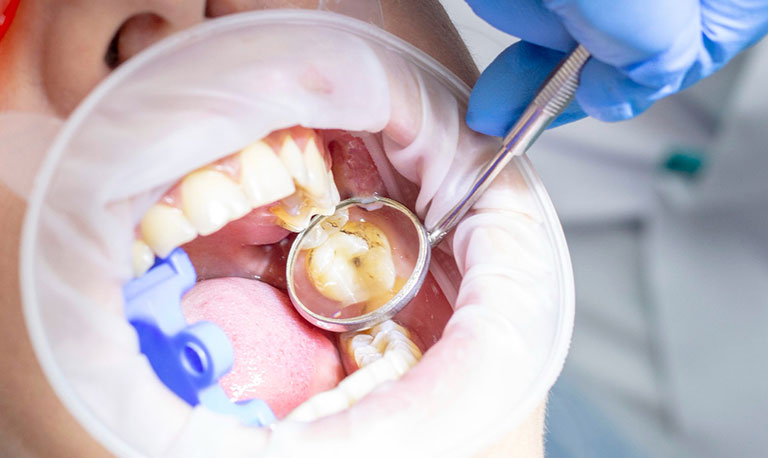
Quick Summary — GIC Filling Gurgaon (Muskaan Dentals)
GIC filling (Glass Ionomer Cement) is a tooth-coloured dental restorative material that chemically bonds directly to tooth structure and continuously releases fluoride to protect against future decay. Unlike composite (resin) fillings that need bonding agents and light-curing, GIC sets through an acid-base reaction in 4-5 minutes. GIC is the preferred filling material for: children's cavities (especially baby teeth), root-surface decay at the gum line, patients with high decay risk, geriatric patients, sensitive teeth, and atraumatic restorative treatments (ART). At Muskaan Dentals in Gurgaon, GIC fillings are ₹1,500–₹2,500 for single-surface restorations. Single-visit procedure, 20-40 minutes per tooth, often without needing the drill. CGHS, ECHS, ESIC, Ayushman Bharat covered.
₹1,500–₹2,500
Single-surface GIC filling
20–40 min
Per tooth, single visit
5+ Years
Lifespan (with proper care)
Fluoride
Continuous release for cavity protection
What Is GIC Filling and How Is It Different?
GIC (Glass Ionomer Cement) is a tooth-coloured dental filling material made from a mixture of fluoroaluminosilicate glass powder and polyacrylic acid liquid. When mixed, it undergoes a chemical (acid-base) setting reaction that hardens the material directly in the cavity. Unlike composite fillings (which need acid-etching, bonding agent, and a curing light), GIC bonds chemically to the tooth structure without these additional steps.
The Two Defining Properties That Set GIC Apart
- Continuous fluoride release: GIC slowly releases fluoride into the surrounding tooth structure for years, helping to remineralise enamel and prevent secondary cavities. This is unique among filling materials — composite, amalgam, and ceramic fillings do not release fluoride.
- Chemical bonding to tooth: GIC bonds directly to dentine and enamel through an ion-exchange reaction. This means less drilling is required — sometimes the cavity just needs cleaning, no prep. Composite needs the tooth surface to be etched and treated with bonding agent before placement.
The Trade-Offs (Honest Comparison)
GIC is excellent for certain cases but has limitations compared to composite:
- Aesthetics: GIC is tooth-coloured but slightly more opaque than composite — visible filling won't blend as seamlessly
- Strength: GIC is less wear-resistant than composite — best for low bite-stress areas, not heavy-chewing back molars where bite force is greatest
- Polish: GIC doesn't polish to the same smooth finish as composite
- Lifespan: GIC fillings typically last 5-7 years; composite can last 8-15 years in low-stress areas
This is why your dentist chooses based on your specific case. For a small cavity on a front tooth or molar in an adult with low decay risk — composite. For a cavity near the gum line, a child's baby tooth, or a patient with high decay risk who would benefit from fluoride release — GIC. Sometimes a combined approach is used — GIC as a base/liner under a composite filling, getting the benefits of both materials.
When GIC Filling Is the Right Choice
👶 Children's Cavities (Baby Teeth)
GIC is the standard for primary teeth — quick placement, fluoride release protects neighbouring teeth, doesn't need precise dryness during placement.
🦷 Root Surface Cavities (At Gum Line)
GIC bonds chemically to root dentine — making it ideal for cervical cavities where moisture control is difficult and composite often fails.
⚠️ High Decay Risk Patients
The continuous fluoride release of GIC actively protects against new cavities — recommended for patients with multiple existing cavities, dry mouth, or poor oral hygiene compliance.
👴 Geriatric / Elderly Patients
Recession exposes root surfaces (where decay is common in older adults). GIC bonds well to these surfaces and tolerates the saliva-rich environment that composite struggles with.
🌍 Camp / Outreach Dentistry (ART)
Atraumatic Restorative Treatment uses hand instruments + GIC — no drill, no electricity needed. Used worldwide for rural and outreach programs.
🛡 As a Base / Liner Under Composite
GIC as a layer beneath composite filling — gives fluoride protection underneath plus composite's wear resistance on top. The "sandwich technique."
😬 Patients Who Can't Tolerate Long Procedures
GIC sets in 4-5 minutes; composite needs multiple bonding steps + curing. For anxious patients or those with limited tolerance, GIC is significantly faster.
🦷 Temporary / Provisional Restorations
When a more permanent restoration is planned later (e.g., before a dental crown), GIC works well as a stable interim filling.
Filling Materials Compared
GIC vs Composite — Honest Comparison
Choosing the right filling material is a decision your dentist makes based on cavity location, size, your age, decay risk, and budget. Here's the honest comparison so you understand why GIC might be recommended for your case.
| Property | GIC (Glass Ionomer) | Composite (Resin) |
|---|---|---|
| Cost (per tooth) | ₹1,500 – ₹2,500 | ₹1,500 – ₹4,500 |
| Appearance | Tooth-coloured (slightly opaque) | Tooth-coloured (best aesthetic) |
| Fluoride release | ✓ Yes (continuous) | ✗ No |
| Bonding to tooth | Chemical (direct) | Mechanical (needs etching) |
| Setting time | 4-5 min (chemical) | 20-40 sec per layer (light cure) |
| Wear resistance | Moderate | Good to excellent |
| Strength under bite force | Low to moderate | Good |
| Best location | Front teeth, root surfaces, baby teeth | Any tooth (versatile) |
| Lifespan | 5-7 years | 8-15 years |
| Moisture sensitivity | Low (tolerates moisture) | High (needs dry field) |
| Best for children | ✓ Yes — first choice | OK |
| Best for gum-line cavities | ✓ Yes — first choice | Difficult (moisture) |
The Honest Verdict — When to Choose What
Choose GIC if: the cavity is on a baby tooth, near the gum line, in a child, in an elderly patient, in someone with high decay risk, or when a fluoride-releasing filling would benefit overall oral health.
Choose Composite if: the cavity is on a visible front tooth (best aesthetics), in a young/middle-aged adult with low decay risk, or in any location where longer lifespan and better strength are priorities.
Sometimes BOTH GIC and Composite together: the "sandwich technique" — GIC base for fluoride release + chemical bond, composite top for aesthetics + strength. Best of both materials for certain cases.
Step by Step
The GIC Filling Procedure at Muskaan Dentals
GIC filling is one of the quickest restorative procedures in dentistry. Here's exactly what happens.
Stage 1 — Examination & Cavity Assessment (5-10 min)
The dentist examines the tooth, takes an X-ray if needed to check cavity depth, and confirms GIC is the right material for your case. Written treatment plan and cost estimate before any procedure.
Stage 2 — Anaesthesia (If Needed — Often Not)
For superficial cavities, no anaesthesia needed. For deeper cavities, local anaesthesia takes 2-3 minutes to numb the area. Children often need no injection — topical numbing gel is usually enough for GIC placement.
Stage 3 — Cavity Cleaning (5-15 min)
The decay is removed using a slow-speed drill, hand instruments, or sometimes minimal preparation (especially in ART technique). GIC requires less aggressive tooth preparation than composite because it bonds chemically. The cavity is cleaned and dried gently — but doesn't need to be bone-dry like composite.
Stage 4 — Mixing & Placement of GIC (4-5 min)
The GIC powder and liquid are mixed to form a thick paste. The paste is placed into the cavity with a small instrument, shaped to match the tooth contour, and allowed to set through its chemical reaction. Set time: 4-5 minutes. No special light needed.
Stage 5 — Finishing & Polishing (5-10 min)
Once set, the filling is shaped to match your natural bite. A small polishing instrument smooths the surface. You can eat normally within 1 hour (avoid hard foods on that tooth for first 24 hours).
Transparent Pricing
GIC Filling Cost in Gurgaon — Transparent Pricing
If you're researching GIC filling cost in Gurgaon, here are the honest figures. Cost depends on cavity size, number of surfaces involved, tooth location, and whether anaesthesia is needed.
| GIC Filling Type | Approximate Cost (Per Tooth) |
|---|---|
| GIC filling — single surface | ₹1,500 – ₹2,500 |
| GIC filling — two surfaces | ₹1,500 – ₹2,500 |
| GIC + fluoride varnish bundle | ₹2,500 – ₹3,500 |
| Atraumatic Restorative Treatment (ART) | ₹1,500 – ₹2,500 |
| Sandwich technique (GIC base + composite top) | From ₹2,500 |
| GIC as cementing material (under crown) | Included with crown placement |
What Drives the Cost Range
- Number of surfaces: single-surface (just one side of the tooth) is cheapest; multi-surface cavities take longer and cost more
- Tooth location: back molars (harder access) cost slightly more than front teeth
- Anaesthesia: deeper cavities needing local anaesthesia add to procedure time
- Combined techniques: sandwich technique with composite top costs more but lasts longer
Insurance & Payment Options
- CGHS, ECHS, ESIC, Ayushman Bharat, CAPF — empanelled. GIC fillings typically fully covered for eligible patients as medically necessary treatment.
- Corporate insurance: Most TPA-approved plans cover routine dental fillings.
- EMI not typically needed given the low cost of single fillings. Available for multiple-tooth treatment plans above ₹10,000.
Meet Your Team
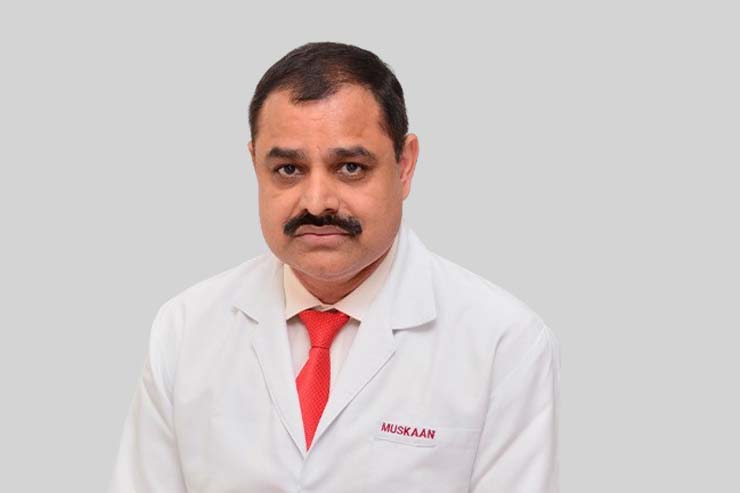
Restorative Dentistry at Muskaan Dentals — Led by Dr. Suresh Ahlawat

Dr. Suresh Ahlawat
BDS · MDS · DNB USA · 35+ Years Experience
Founder and Chief Surgeon at Muskaan Dentals — leading a team of general dentists, pediatric dentists, and restorative specialists. International training across France, Korea, Europe, China, and Bangkok including advanced restorative protocols.
- BDS, MDS, DNB USA — Diplomate of National Board, USA
- 35+ years of clinical practice including restorative and pediatric dentistry
- Founder of the 1st NABH-accredited speciality dental chain in Gurugram
- Multiple filling materials available — GIC, composite, sandwich technique — choosing the right material for each case
- Pediatric specialists in-house for child-friendly GIC fillings on baby teeth
Read more about Dr. Ahlawat's credentials and case history →
4 NABH-Accredited Branches
GIC Filling Available at All 4 Muskaan Dentals Branches
All branches share +91-94-94-94-7304, operate Mon–Sat 10 AM–7 PM and Sunday 11 AM–1 PM. Same-day appointments available for routine fillings.
📍 Sector 43 (Head Office)
C-1039, Near Vyapar Kendra Rd, Block C, Sushant Lok Phase I, 122009
4.8★ · 660+ reviews
📍 Sector 56
167-P, 1st Floor, Near Kendriya Vihar, Sector 56, 122011
4.8★ · 715+ reviews
📍 Sector 14
H No 449 P, Main Market Road, Opposite Community Centre, Sector 14, 122001
4.8★ · 380+ reviews
📍 Sector 52 (Ardee City)
Villa No 1, Ardee City Near Gate B1/01, Palm Grv Hts Dr, Sector 52, 122003
4.9★ · 148+ reviews
Frequently Asked Questions
GIC Filling FAQs — Gurgaon
The most common questions about GIC dental fillings.
What is the cost of GIC filling in Gurgaon?
At Muskaan Dentals, GIC filling is ₹1,500-₹2,500 for single-surface restorations, the same for two-surface. Sandwich technique (GIC + composite) from ₹2,500. CGHS, ECHS, ESIC, Ayushman Bharat covered for eligible patients.
Is GIC filling painful?
No — GIC filling is generally painless. Superficial cavities often need no anaesthesia at all. Deeper cavities use local anaesthesia (2-3 minutes to numb the area). Children typically tolerate GIC placement very well — often with just topical numbing gel rather than injection. GIC also requires less aggressive drilling than composite, making the procedure more comfortable.
How long does GIC filling last?
GIC fillings typically last 5-7 years with proper care. Pediatric GIC fillings on baby teeth last until the baby tooth naturally falls out. For high-wear locations (back molars), GIC may need replacement sooner — 3-5 years. Sandwich technique (GIC + composite) lasts longer, similar to composite (8-12 years).
Why does my dentist recommend GIC instead of composite?
Several possible reasons: (1) Your cavity is on a baby tooth — GIC is the standard for primary teeth. (2) The cavity is at the gum line — GIC bonds chemically here where composite fails due to moisture. (3) You have high decay risk — GIC's fluoride release protects against future cavities. (4) You're an elderly patient with root surface decay. (5) Quick procedure needed — GIC sets in 5 minutes vs composite's multi-step process. Your dentist chooses the material that best matches your specific case.
Is GIC filling tooth-coloured?
Yes — GIC is tooth-coloured but slightly more opaque than composite. It blends well with natural teeth but won't match as perfectly as composite for front teeth. For highly visible front teeth where aesthetics is the top priority, composite is usually preferred. For molars, baby teeth, and gum-line cavities, the slight aesthetic difference of GIC isn't typically noticeable.
Does GIC really release fluoride?
Yes — this is one of GIC's key advantages. GIC slowly releases fluoride into the surrounding tooth structure over years, helping to remineralise enamel and prevent secondary cavities around the filling. This makes GIC particularly valuable for patients with high decay risk, children, and the elderly. Composite and amalgam fillings do NOT release fluoride.
How long does the GIC filling procedure take?
Total appointment time: 20-40 minutes per tooth. Examination 5-10 min, anaesthesia (if needed) 2-3 min, cavity cleaning 5-15 min, GIC mixing and placement 4-5 min, finishing and polishing 5-10 min. Significantly faster than composite which requires multiple bonding and curing steps.
Can I eat normally after GIC filling?
Yes — resume normal eating within 1 hour of placement. Avoid extremely hard foods (ice, hard nuts) on that tooth for the first 24 hours to allow the GIC to fully harden. Otherwise, no special restrictions. Brushing and flossing can resume normally that evening.
Is GIC filling good for children?
Yes — GIC is the gold standard filling material for children. Several reasons: (1) fluoride release protects developing teeth, (2) chemical bonding doesn't require precise dryness (kids often can't keep dry for composite), (3) faster procedure suits short attention spans, (4) tolerates the saliva-rich environment in children's mouths, (5) safe for baby teeth that will eventually be replaced. Most pediatric dental societies recommend GIC as first-choice for primary tooth fillings.
What if my filling needs replacement?
When a GIC filling reaches end of life or shows wear, it's straightforward to replace. The old GIC is removed, cavity re-cleaned, and a new filling placed — using either GIC again or composite/sandwich technique depending on the situation. If the cavity has grown larger over time, a dental crown may be needed instead. If decay has reached the nerve, root canal treatment may be needed before refilling.
Are GIC fillings safe?
Yes — GIC has been used clinically for 50+ years and is considered one of the safest dental materials available. It contains no mercury (unlike amalgam). No BPA (unlike some composite formulations). The fluoride release is at safe, beneficial levels. Approved by all major dental regulatory bodies including FDA, CDSCO (India), and the Indian Dental Association.
How do I book an appointment for GIC filling?
Three ways: call or WhatsApp +91-94-94-94-7304, book online at muskaandentals.com/appointment, or walk in at any of our 4 branches. Same-day appointments available for routine fillings. The consultation includes examination, X-ray if needed, and treatment plan with cost estimate.
Fix Cavities the Right Way — Book Your GIC Filling Today
Same-day appointments. Fluoride-releasing tooth-coloured fillings. Child-friendly. Single visit. GIC filling in Gurgaon by Dr. Suresh Ahlawat — 35+ years experience — across all 4 NABH-accredited Muskaan Dentals branches.
Our Initiatives



For any Queries or assistance please call: +91-94-94-94-7304
MUSKAAN Dentals is 1st NABH ACCREDITED Chain of Speciality dental centers headed by Dr. Suresh Ahlawat BDS, MDS, DNB (USA) having more than 30 Years of National & International experience, Dr. Ahlawat is a Maxillofacial Surgeon Specially trained in Dental Implants in France, Korea, Europe, China and Bangkok etc in various implant systems.
Treatments
Dental Implants
Dental Crowns
Root Canal Treatment
Dental Bridges
Root Canal
Full Mouth Rehabilitation
Clear Aligners
Laser Dentistry
Pediatric Dentistry
Contacts
Address
C-1039, Near Vyapar Kendra, Sushant Lok Phase - 1, Gurgaon, Haryana - 122009
© 2026 Muskaan Dentals Global | All Right Reserved.
Digital Partner: CODEMOTTO