
Zirconia dental implants Gurgaon at Muskaan Dentals — tooth-coloured, metal-free ceramic alternatives to titanium implants. This dentist-reviewed guide explains who genuinely benefits from ceramic implants, the brands we use (Z-Systems, Nobel PURE, Straumann PURE, CeraRoot), the honest limitations, and how to choose between titanium and zirconia for your case.
⚪ Ceramic • Metal-Free • Honest Trade-offs
Zirconia Dental Implants in Gurgaon
Ceramic, Metal-Free, Tooth-Coloured
Zirconia dental implants Gurgaon are ceramic, metal-free, tooth-coloured implants — a real alternative to titanium for the right case. They genuinely help in three situations: confirmed titanium sensitivity, thin-gum aesthetic zones, or strong patient preference for metal-free dentistry. For most other cases titanium remains the more proven and flexible choice. At Muskaan Dentals, we offer established international ceramic brands (Z-Systems, Nobel PURE, Straumann PURE, CeraRoot) with a written side-by-side comparison so you decide on full information.
ZrO₂
Zirconium dioxide
100%
Metal-free
95–97%
5-year success
+20–40%
vs titanium cost
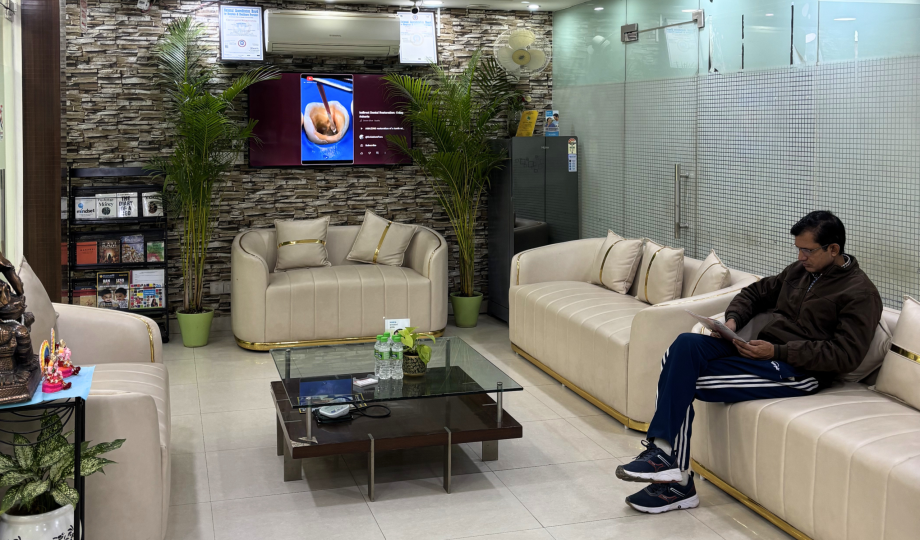
✅ Real clinic photo — already in Media Library (geo-tag with clinic coordinates on upload).
For patients researching dental implants today, ceramic (zirconia) implants are increasingly visible as an alternative to traditional titanium. The marketing language around them tends toward the absolute — “the future of dentistry,” “totally safer,” “natural choice.” The clinical reality is more measured. Ceramic implants are genuinely excellent for specific cases, comparable to titanium for many others, and not a universal upgrade. This dentist-reviewed guide explains what zirconia dental implants Gurgaon patients can choose are, who really benefits from them, the brands we use at Muskaan Dentals, and where titanium remains the better recommendation.
What Are Zirconia (Ceramic) Dental Implants?
Zirconia dental implants are made from zirconium dioxide (ZrO₂) — a strong, biocompatible ceramic material that has been used in medical applications (including hip replacements and knee joints) for decades. They function the same way as titanium implants: a screw-shaped fixture is placed in the jawbone, the bone heals around it (osseointegration), and a crown is fitted on top. The difference is purely material. Zirconia implants are typically one-piece designs (fixture and abutment fused together) or, in newer systems, two-piece designs that allow more flexibility. They are tooth-coloured throughout — hence the patient-friendly description “white implants” — with no visible metal anywhere.
Who Genuinely Benefits From Ceramic Implants?
RARE BUT REAL
🤔 Titanium sensitivity
Documented titanium allergy or sensitivity is extremely rare (well under 1% of the population) but does exist. For confirmed cases, zirconia is the clear answer.
AESTHETIC ZONE
👁️ Thin gum tissue, front teeth
In patients with thin gum tissue around front teeth, titanium can show through as a dark shadow over years. Zirconia eliminates that risk because it is tooth-coloured throughout.
PERSONAL CHOICE
🌿 Metal-free preference
Patients with a strong personal preference for metal-free dentistry, often part of broader holistic health choices. A legitimate reason — we respect the preference and provide the option.
HONEST NOTE
⚡ For most other cases
Titanium remains the more proven and flexible recommendation. There is no clinical evidence that healthy patients without specific indications benefit from switching to zirconia.
Illustration to add — AI-generated
| 📐 SIZE | 780 × 560 px (WebP, max 150KB) |
| 🏷️ FILE | titanium-vs-zirconia-implant-comparison-illustration.webp |
| 🔤 ALT | Cross-section illustration comparing titanium and zirconia dental implants: titanium with 50-plus years of data and zirconia ceramic with 15-20 years, with biocompatibility, aesthetics, and cost comparison icons |
🎨 AI IMAGE PROMPT:
Clean medical infographic on a soft off-white background showing a side-by-side comparison of two dental implant types in a jawbone cross-section: LEFT ‘TITANIUM IMPLANT’ showing a grey two-piece implant with abutment and crown, fixed in the jawbone, with a small label ‘50+ YEARS DATA’. RIGHT ‘ZIRCONIA / CERAMIC IMPLANT’ showing a white one-piece tooth-coloured implant in the jawbone with a crown, with a small label ‘15-20 YEARS DATA’. Below the diagrams, three small comparison icons in a row: a check mark labelled ‘BOTH BIOCOMPATIBLE’, an aesthetic-eye icon labelled ‘ZIRCONIA = NO METAL SHOW-THROUGH’, and a price tag icon labelled ‘ZIRCONIA +20-40% COST’. Navy #1a1a2e and red #c0392b accents, grey accent on titanium side, white-and-light-grey on zirconia side. No baked-in paragraph text beyond short labels. Professional dental-comparison aesthetic, flat vector cross-section style.
Clean medical infographic on a soft off-white background showing a side-by-side comparison of two dental implant types in a jawbone cross-section: LEFT ‘TITANIUM IMPLANT’ showing a grey two-piece implant with abutment and crown, fixed in the jawbone, with a small label ‘50+ YEARS DATA’. RIGHT ‘ZIRCONIA / CERAMIC IMPLANT’ showing a white one-piece tooth-coloured implant in the jawbone with a crown, with a small label ‘15-20 YEARS DATA’. Below the diagrams, three small comparison icons in a row: a check mark labelled ‘BOTH BIOCOMPATIBLE’, an aesthetic-eye icon labelled ‘ZIRCONIA = NO METAL SHOW-THROUGH’, and a price tag icon labelled ‘ZIRCONIA +20-40% COST’. Navy #1a1a2e and red #c0392b accents, grey accent on titanium side, white-and-light-grey on zirconia side. No baked-in paragraph text beyond short labels. Professional dental-comparison aesthetic, flat vector cross-section style.
Which Zirconia Implant Brands Are Used at Muskaan Dentals?
We use only established international ceramic implant systems with peer-reviewed long-term clinical data. The selection includes Z-Systems (Swiss-made, one of the most-researched zirconia implant brands worldwide, available in one-piece and two-piece designs), Nobel Biocare PURE Zirconia (from one of the global leaders in titanium implantology, with their ceramic line backed by the same R&D resources), Straumann PURE Ceramic Implant (Swiss precision manufacturing, two-piece design with excellent aesthetics), and CeraRoot (Spanish-made, well-established in the metal-free dentistry community). The specific brand recommended for your case depends on implant position, available bone, and current product availability. Every implant brand and product code is stated in writing on your treatment plan — we never use unbranded, unknown, or grey-market ceramic implants.
What Are the Honest Limitations of Ceramic Implants?
A page that only talks about benefits is marketing. Four honest limitations of zirconia implants worth knowing: (1) Less long-term data — titanium has 50+ years of clinical follow-up; zirconia has 15–20. The gap is closing but still real. (2) Slightly higher fracture risk — some studies show ceramic implants are more prone to micro-fractures under heavy load, particularly with one-piece designs in posterior teeth grinders. (3) Less prosthetic flexibility — one-piece zirconia designs cannot be repositioned after placement, requiring more precise initial surgical planning. Two-piece zirconia systems have improved this but the range remains narrower than titanium. (4) Higher cost — 20–40% premium over equivalent titanium options due to manufacturing volumes and material costs.
None of this means zirconia is a bad choice — used correctly in the right case, it is excellent. It means the decision should be informed rather than driven by marketing. At Muskaan Dentals, Dr. Suresh Ahlawat (BDS, MDS, DNB USA, 35+ years) provides a side-by-side written comparison of titanium and zirconia options for your specific case, with honest pros, cons, and costs. CGHS, ECHS, Ayushman Bharat accepted; EMI options available. Care across four NABH-accredited Gurgaon branches — Sector 43 (Sushant Lok), Sector 56, Sector 14, and Sector 52 (Ardee City).
Medically reviewed by Dr. Suresh Ahlawat, BDS, MDS, DNB USA — Chief Implantologist, Muskaan Dentals, Gurgaon. This article is for general information and does not replace a clinical consultation.
Frequently Asked Questions
Zirconia dental implants in Gurgaon — your common questions answered honestly.
What are zirconia dental implants?
Zirconia dental implants are tooth-coloured ceramic implants made from zirconium dioxide — a strong, biocompatible material widely used in medical applications. They function the same way as titanium implants (replacing the tooth root and supporting a crown on top) but are completely metal-free. They appear white throughout, which suits patients with thin gum tissue where a metallic implant might show through over time, and patients who prefer non-metal solutions for personal or medical reasons. Brand options include Z-Systems, Nobel Biocare PURE Zirconia, Straumann PURE, and CeraRoot.
How do ceramic implants compare with titanium implants?
Honestly: titanium implants are the gold standard with 50+ years of long-term research, slightly higher success rates in some studies, and broader case applicability. Ceramic implants are the newer alternative with 15–20 years of clinical evidence, modestly higher cost, and excellent aesthetics. For most patients, either material gives excellent long-term outcomes. Zirconia genuinely outperforms titanium in three specific situations: patients with confirmed titanium sensitivity (rare but real), thin-gum aesthetic zone cases where metal show-through is a risk, and patients who strongly prefer metal-free dentistry. For other cases, titanium remains the more flexible and proven choice.
Who actually benefits from metal free implants?
Three groups, in order of clinical relevance. First, patients with documented titanium allergy or sensitivity — extremely rare (well under 1% of the population) but real when diagnosed. Second, patients in the aesthetic zone (front teeth) with thin gum tissue, where titanium can show through the gum as a dark shadow over years — zirconia eliminates that risk. Third, patients with strong personal preference for metal-free dentistry, often connected to broader holistic health choices. There is no clinical evidence that zirconia is universally healthier than titanium for healthy patients without these specific indications.
Which zirconia implant brands are used at Muskaan Dentals?
We use established international brands with peer-reviewed long-term data: Z-Systems (Swiss-made, one of the most-researched ceramic implant brands), Nobel Biocare PURE Zirconia (from one of the world’s leading implant manufacturers), Straumann PURE Ceramic Implant (Swiss precision), and CeraRoot (Spanish-made, well-established). The brand chosen for your case depends on the implant position, your specific anatomy, and current availability. The brand and product code are stated in writing on every treatment plan — we do not use unbranded or unknown-origin ceramic implants.
How much do white implants Gurgaon patients can choose cost?
Zirconia implants typically cost 20–40% more than equivalent titanium implants. The reasons are real: lower global manufacturing volumes, more expensive raw material, and a more limited supplier base. At Muskaan Dentals, titanium implants start from ₹25,000 all-inclusive; equivalent zirconia options start higher and the exact cost depends on the brand and case complexity. A written, side-by-side estimate comparing titanium and zirconia options for your specific case is provided at the consultation, so you can decide based on full information rather than only being shown one option.
Are zirconia implants safe and what is the success rate?
Yes, they are safe and biocompatible. Modern zirconia implant systems show 5-year success rates of approximately 95–97% — close to the 96–98% range for titanium, with the gap narrowing as the technology matures. The honest limitations: less long-term (15+ year) data than titanium, slightly higher fracture risk in some studies (particularly with one-piece designs under heavy load), and fewer prosthetic options for complex restorations. Zirconia is a strong, well-established choice for the right case — not a wonder material, and not a poor cousin to titanium. Dr. Suresh Ahlawat discusses the realistic picture honestly at the consultation.
Want a Side-by-Side Titanium vs Zirconia Estimate?
Book a Free Consultation in Gurgaon
A CBCT 3D scan, an honest review of whether zirconia is genuinely right for your case, and a written treatment plan comparing titanium and ceramic options with brand-specific costs.
4 NABH branches across Gurgaon · Mon–Sat 10 AM–7 PM · Sunday 11 AM–1 PM
Dr. Suresh Ahlawat · BDS, MDS, DNB USA · 35+ years · NABH · 4.8★ · 1,900+ Reviews
Our Initiatives



For any Queries or assistance please call: +91-94-94-94-7304
MUSKAAN Dentals is 1st NABH ACCREDITED Chain of Speciality dental centers headed by Dr. Suresh Ahlawat BDS, MDS, DNB (USA) having more than 30 Years of National & International experience, Dr. Ahlawat is a Maxillofacial Surgeon Specially trained in Dental Implants in France, Korea, Europe, China and Bangkok etc in various implant systems.
Treatments
Dental Implants
Dental Crowns
Root Canal Treatment
Dental Bridges
Root Canal
Full Mouth Rehabilitation
Clear Aligners
Laser Dentistry
Pediatric Dentistry
Contacts
Address
C-1039, Near Vyapar Kendra, Sushant Lok Phase - 1, Gurgaon, Haryana - 122009
© 2026 Muskaan Dentals Global | All Right Reserved.
Digital Partner: CODEMOTTO