
Science of Implants Patient Education
Osseointegration — How Your Dental Implant Fuses With Bone
✓ The Biology Behind Implant Success · ✓ Week-by-Week Healing Timeline · ✓ What Helps & What Hurts the Process · ✓ Reviewed by Dr. Suresh Ahlawat (BDS, MDS, DNB USA)
The reason dental implants work — and last decades — comes down to one biological process: osseointegration. It's the process by which living bone grows directly onto the surface of the titanium implant, locking it in place as firmly as a natural tooth root. Understanding how osseointegration works helps you understand why the healing period matters, why certain habits affect success, and why implants are so remarkably durable.
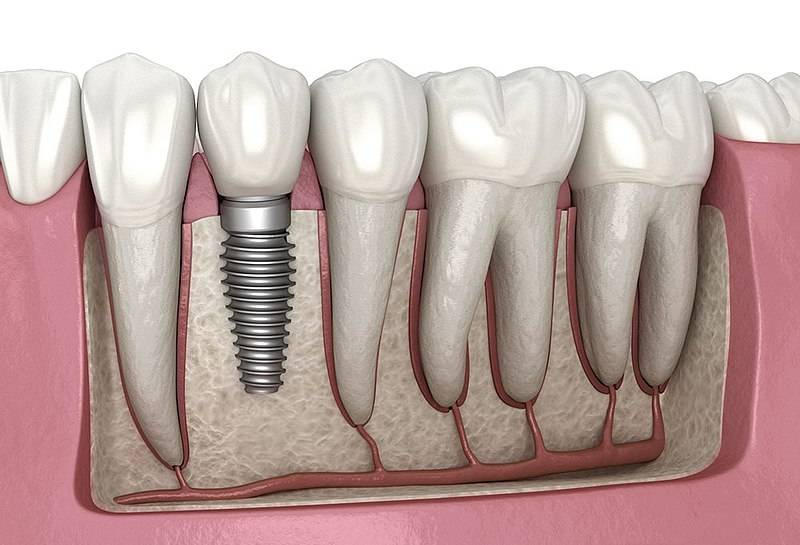
⚠️ DELETE AFTER IMAGE UPLOAD
IMAGE #1 of 4 — HERO
Dimensions: 540 × 660 px · Format: WebP · Max: 150KB
Alt text: Osseointegration explained — how a dental implant fuses with jawbone at Muskaan Dentals Gurgaon
🎨 AI prompt: Detailed medical illustration of a titanium dental implant in cross-section of jawbone showing bone growing onto the implant surface, clean educational style, red highlight on bone-implant contact, navy labels, photorealistic bone texture, 540x660
How Long Does It Take?
3–4 Months
For most patients, osseointegration takes 3–4 months. During this time, new bone grows directly onto the titanium implant surface, creating a bond strong enough to support chewing forces for decades. This healing period is the reason implants last a lifetime — it can't be rushed, but it's the foundation of everything that follows.
Osseointegration — In Plain Language
Osseointegration is the process where your jawbone grows directly onto the surface of a titanium dental implant, bonding with it at a microscopic level. The word itself comes from Latin: osteo (bone) + integrare (to make whole). This isn't glue or cement — it's living biology. Your body treats the titanium surface as compatible and grows new bone cells directly onto it, creating a structural bond as strong as the connection between a natural tooth root and the jawbone. This process typically takes 3–4 months and is the reason dental implants achieve a 95–98% long-term success rate.
The Osseointegration Timeline — What Happens Inside Your Jaw
Here's what your body is doing week by week after implant placement — even though you feel nothing:
Day 1 — Week 1
Blood Clot Formation & Inflammatory Response
A blood clot forms around the implant in the bone. Your body sends healing cells to the site — this is the controlled inflammation that triggers the repair process. You may feel mild soreness and swelling, which is normal.
Week 1 — Week 4
New Bone Begins Forming (Woven Bone)
Specialised bone-building cells called osteoblasts begin laying down new bone tissue around the implant. This early bone is called woven bone — soft and quick to form, like biological scaffolding. It's not yet strong enough for chewing.
Month 1 — Month 3
Bone Remodelling & Strengthening (Lamellar Bone)
The woven bone is gradually replaced by mature, organised lamellar bone — the strong, dense bone that provides permanent structural support. The implant becomes increasingly stable as this denser bone grows directly onto its surface.
Month 3 — Month 4
Integration Complete
By now, the implant is firmly locked in mature bone. Dr. Ahlawat tests stability — if the implant is solid, the healing phase is complete and the permanent crown can be fitted. You now have a new tooth root that functions like the natural one it replaced.
Month 4 Onward
Lifelong Maintenance
The bone continues to maintain itself around the implant just as it would around a natural root — as long as you keep the area clean and attend regular professional check-ups. This is why implants can last 20–30+ years.

⚠️ DELETE AFTER IMAGE UPLOAD
IMAGE #2 of 4 — TIMELINE DIAGRAM
Dimensions: 900 × 500 px · Format: WebP · Max: 150KB
Alt text: Osseointegration timeline showing bone fusion stages around a dental implant over months
🎨 AI prompt: Clean educational medical timeline showing four stages of bone growing onto an implant — clot, woven bone, lamellar bone, complete integration — with labelled cross-section illustrations at each stage, red and navy scheme, white background, 900x500
What Helps Osseointegration Succeed — and What Threatens It
The 95–98% success rate doesn't happen by accident. Here's what supports the process and what can interfere:
✅ Factors That Help
- Good bone quality and quantity — dense, healthy bone integrates faster and more reliably
- Quality implant surface — modern implants from brands like Straumann and Nobel Biocare have micro-textured surfaces that accelerate bone attachment
- CBCT-planned placement — precise positioning in the densest available bone
- Good oral hygiene — keeps infection away from the healing site
- Controlled diabetes — HbA1c below 7.5 supports normal healing
- Following aftercare instructions — soft diet, no smoking, gentle cleaning
⚠️ Factors That Threaten It
- Smoking — restricts blood flow to healing bone, significantly increasing failure risk
- Uncontrolled diabetes — impairs the body's healing response
- Infection — bacteria at the implant site can prevent bone from bonding
- Premature loading — putting chewing force on the implant before it's integrated
- Poor bone quality — very soft bone may not grip the implant initially (can be managed with technique adjustments)
- Low-quality implants — cheap unbranded implants with poor surface treatment integrate less reliably
This is exactly why Muskaan Dentals uses CBCT planning, quality brands, and assesses conditions like diabetes and smoking before surgery — every factor that influences osseointegration is managed upfront, not left to chance. Diabetic patients and heart patients can achieve excellent osseointegration when their conditions are properly controlled.
Why This Matters to You as a Patient
Understanding Osseointegration Helps You Make Better Decisions
- The healing period is non-negotiable — any clinic promising permanent crowns in days is bypassing the biology that makes implants last. 3–4 months of healing = decades of function
- Why brand matters — premium implant brands invest heavily in surface technology that directly accelerates osseointegration. Cheap implants cut corners here
- Why experience matters — placing the implant at the right depth, angle, and in the right bone density requires judgement that comes from thousands of cases. Dr. Ahlawat's 35+ years make this the foundation, not the afterthought
- Why aftercare isn't optional — your behaviour during healing directly affects whether osseointegration succeeds. Following instructions protects a process your body is doing for you
- Why implants outlast alternatives — no other tooth replacement bonds with living bone. Bridges rest on adjacent teeth; dentures sit on the gum. Only implants become part of your jaw — which is why they can last a lifetime
The warranty on your implant reflects the clinic's confidence in this process. When osseointegration is supported by proper planning, quality materials, and experienced hands, the result is a new tooth that functions just like the one you lost. Read real success stories from patients who went through this process.
Ready to Start Your Implant Journey?
A free consultation at Muskaan Dentals includes a CBCT scan to assess your bone and an honest discussion about your case. Dr. Ahlawat will explain how osseointegration will work specifically for you. 35+ years across 4 NABH branches in Gurugram.
Frequently Asked Questions — Osseointegration
What is osseointegration in dental implants?
Osseointegration is the biological process where your jawbone grows directly onto the titanium surface of a dental implant, bonding with it at a microscopic level. This creates a structural connection as strong as a natural tooth root, which is why dental implants can last decades.
How long does osseointegration take?
Typically 3–4 months for most patients. During this time, bone cells build new tissue directly onto the implant surface. The lower jaw often integrates slightly faster than the upper jaw. Factors like bone quality, diabetes, and smoking can affect the timeline.
Can I eat normally during the osseointegration period?
You'll start with a soft diet for the first 1–2 weeks, then gradually return to firmer foods. During the full healing period, avoid very hard or crunchy foods directly on the implant site. A temporary tooth may be provided so you're not left without a tooth during healing.
What happens if osseointegration fails?
If the implant doesn't integrate with bone — which happens in about 2–5% of cases — it becomes loose and must be removed. After a healing period of a few weeks, a new implant can usually be placed. Premium brands provide manufacturer warranty covering the replacement fixture. See our risks guide for more detail.
Does smoking affect osseointegration?
Yes — significantly. Smoking restricts blood flow to healing bone, which slows and can prevent osseointegration. Smokers have a higher implant failure rate. Muskaan Dentals advises stopping smoking ideally 2 weeks before and 8 weeks after surgery to give the implant the best chance of integrating successfully.
Why does titanium bond with bone?
Titanium is biocompatible — the human body doesn't recognise it as foreign and doesn't reject it. When titanium is placed in bone, a thin oxide layer forms on its surface that bone cells (osteoblasts) treat as compatible and grow directly onto, creating a permanent structural bond.
Can osseointegration happen in weak or thin bone?
Weak or thin bone can make integration more challenging but not impossible. Bone grafting can build up the volume and density before or during implant placement. Shorter or wider implant designs can also be used to maximise contact with available bone. Dr. Ahlawat assesses this with CBCT imaging during consultation.
How do I know if my implant has successfully integrated?
At your follow-up appointment after the healing period, Dr. Ahlawat tests the implant's stability. A successfully integrated implant feels completely solid — there's no movement, no pain, and no discomfort. Only when integration is confirmed does the permanent crown fitting proceed.
Reviewed by Dr. Suresh Ahlawat, BDS, MDS, DNB (USA) — Chief Implantologist, Muskaan Dentals, Gurugram. 35+ years of experience in implant placement and osseointegration outcomes. NABH-accredited across 4 branches. View full profile →
⚠️ DELETE AFTER IMAGE UPLOAD
IMAGE #3 of 4 — DR. AHLAWAT PORTRAIT
Dimensions: 520 × 400 px · Format: WebP · Max: 150KB
Alt text: Dr. Suresh Ahlawat — dental implant osseointegration expert at Muskaan Dentals Gurgaon
Ideal: REAL professional photo of Dr. Ahlawat.
⚠️ DELETE AFTER IMAGE UPLOAD
IMAGE #4 of 4 — CBCT / INTEGRATED IMPLANT
Dimensions: 780 × 500 px · Format: WebP · Max: 150KB
Alt text: CBCT scan showing osseointegrated dental implant in jawbone at Muskaan Dentals Gurgaon
Ideal: REAL CBCT scan showing an integrated implant in bone. If unavailable, AI-generated cross-section of titanium implant locked in dense bone with visible bone contact, 780x500.
Our Initiatives



For any Queries or assistance please call: +91-94-94-94-7304
MUSKAAN Dentals is 1st NABH ACCREDITED Chain of Speciality dental centers headed by Dr. Suresh Ahlawat BDS, MDS, DNB (USA) having more than 30 Years of National & International experience, Dr. Ahlawat is a Maxillofacial Surgeon Specially trained in Dental Implants in France, Korea, Europe, China and Bangkok etc in various implant systems.
Contacts
Address
C-1039, Near Vyapar Kendra, Sushant Lok Phase - 1, Gurgaon, Haryana - 122009
© 2026 Muskaan Dentals Global | All Right Reserved.
Digital Partner: CODEMOTTO