
Dental implants for low bone density patients — graft-free options. This dentist-reviewed guide focuses specifically on basal, short, narrow, and angled All-on-4 implants that allow placement without prior bone grafting. CBCT-driven case selection at Muskaan Dentals.
🔩 Graft-Free Options Exist • Get a Second Opinion
Dental Implants for Low Bone Density in Gurgaon
Graft-Free Options — Yes, They Exist
If you have been told you need bone grafting before an implant, you may have more dental implants for low bone density options than you realise. Four modern techniques allow implant placement without prior grafting in many cases: basal implants, short implants, narrow implants, and angled All-on-4 placement. The right route depends on a CBCT 3D scan — not on a blanket clinic policy. Faster timelines, lower total cost, and no separate surgical stage when the technique fits your case.
🔩 Basal
Deep cortical anchor
↧ Short
6–8 mm length
∥ Narrow
Under 3.5 mm wide
⦿ All-on-4
Angled placement
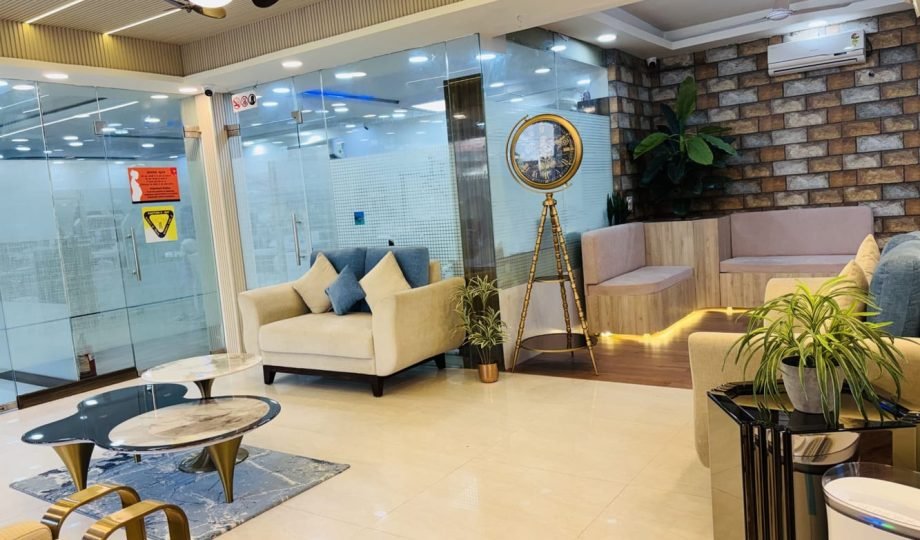
✅ Real clinic photo — already in Media Library (geo-tag with clinic coordinates on upload).
Many patients with thin or shrunken jawbone hear the same advice at the first dental clinic they visit: “You’ll need bone grafting before we can place an implant.” Sometimes that is the most honest answer. Often, it isn’t. Modern implantology offers several reliable techniques for implants without bone graft — each with proven long-term success in the right cases. This dentist-reviewed guide focuses specifically on the graft-free options for patients with low bone density, when each is appropriate, and how to know whether you genuinely need grafting or whether a thin bone implant solution can avoid the separate surgical stage entirely.
Why Do So Many Patients Get Told They Need Bone Grafting?
Two reasons. First, the genuine clinical one: standard dental implants (typically 10–13 mm long, 4–5 mm wide) need a corresponding amount of healthy bone to be placed safely. When the jaw has shrunk significantly, that standard implant simply does not fit — grafting first is then the right answer. Second, the less obvious reason: not every dental clinic offers the full range of alternative techniques. A clinic that places only standard implants will logically recommend grafting whenever the bone falls short. A clinic with experience in basal implants, short implants, narrow implants, and angled All-on-4 placement has more options for the same case — and is more likely to find one that does not need grafting.
The honest path is to get a second opinion from a clinic that offers the full range of techniques, with a CBCT scan to confirm what your specific bone can support.
Which Less Bone Implants Options Could Fit Your Case?
MOST ESTABLISHED
🔩 Basal Implants
Anchored in the deeper, denser basal bone of the jaw rather than the surface bone that shrinks. Often allow fixed teeth without prior grafting, even in severe cases. Faster overall timeline.
Best for: Significant bone loss, fast timeline needed.
SIMPLE & PROVEN
↧ Short Implants
6–8 mm long instead of the standard 10–13 mm. Fit limited bone height without grafting. Long-term success comparable to standard-length implants when placed in dense bone.
Best for: Reduced height, adequate width and density.
∥ Narrow / Mini Implants
Diameter under 3.5 mm to fit thin ridges without ridge augmentation. Suitable for front teeth and lower-load areas. Mini implants (under 3 mm) are sometimes used for denture stabilisation.
Best for: Thin ridges, front teeth, denture retention.
FULL-ARCH FIX
⦿ All-on-4 Angled
Four implants tilted at angles to use the strongest areas of bone, supporting a full arch of fixed teeth. Avoids grafting in the great majority of full-arch replacement cases.
Best for: Full-jaw replacement.
SEVERE CASES
🦴 Zygomatic Implants
Long implants anchored in the cheekbone (zygoma) when upper-jaw bone is severely deficient. Specialist-level procedure that avoids the need for extensive grafting.
Best for: Severe upper-jaw atrophy.
WHEN NEEDED
⚠️ When Grafting IS Right
Some cases genuinely cannot avoid grafting safely — typically severe localised defects in important load-bearing positions. We will recommend grafting honestly rather than force a graft-free option.
Honesty matters more than the angle.
Illustration to add — AI-generated
| 📐 SIZE | 780 × 560 px (WebP, max 150KB) |
| 🏷️ FILE | graft-free-implant-options-illustration.webp |
| 🔤 ALT | Cross-section illustration of four graft-free dental implant options for low bone density: basal, short, narrow, and angled All-on-4 placement |
🎨 AI IMAGE PROMPT:
Clean medical infographic on a soft off-white background showing four side-by-side cross-section diagrams of a jawbone with reduced bone, each illustrating a different graft-free implant solution: (1) BASAL IMPLANT — a distinctive T-shaped implant anchored in the deeper cortical bone, (2) SHORT IMPLANT — a 6–8mm stubby implant in shallow bone with normal density, (3) NARROW / MINI IMPLANT — a thin implant in a knife-edged ridge, (4) ALL-ON-4 ANGLED — a full lower jaw with four implants two of which are tilted at angles to avoid bone-poor zones. Each diagram has a short caption label below. Navy #1a1a2e and red #c0392b accents, blue accent on the graft-free theme. No baked-in paragraph text beyond short labels. Professional dental-surgical education aesthetic, flat vector cross-section style.
Clean medical infographic on a soft off-white background showing four side-by-side cross-section diagrams of a jawbone with reduced bone, each illustrating a different graft-free implant solution: (1) BASAL IMPLANT — a distinctive T-shaped implant anchored in the deeper cortical bone, (2) SHORT IMPLANT — a 6–8mm stubby implant in shallow bone with normal density, (3) NARROW / MINI IMPLANT — a thin implant in a knife-edged ridge, (4) ALL-ON-4 ANGLED — a full lower jaw with four implants two of which are tilted at angles to avoid bone-poor zones. Each diagram has a short caption label below. Navy #1a1a2e and red #c0392b accents, blue accent on the graft-free theme. No baked-in paragraph text beyond short labels. Professional dental-surgical education aesthetic, flat vector cross-section style.
How Is the Right Graft-Free Technique Chosen?
The decision is made from one piece of data: your CBCT 3D bone scan. This shows the precise height, width, and density of bone at every potential implant site. With that information, the technique is matched to the bone rather than the bone forced to fit the technique. Reduced height but adequate width and density tends to point toward short implants. Thin ridges of normal height tend to point toward narrow implants. Severe full-arch bone loss tends to point toward basal or angled All-on-4. Very severe upper-jaw atrophy points toward zygomatic implants. Mixed defects sometimes need a combination.
At Muskaan Dentals, the CBCT review with Dr. Suresh Ahlawat (BDS, MDS, DNB USA) includes a transparent discussion of every viable option — not just the one that happens to be most convenient or profitable. The written treatment plan lists each option, its pros and cons, expected timeline, and all-inclusive cost. If your case genuinely needs grafting, we will say so. If it does not, we will explain which graft-free option fits and why.
Medically reviewed by Dr. Suresh Ahlawat, BDS, MDS, DNB USA — Chief Implantologist, Muskaan Dentals, Gurgaon. This article is for general information and does not replace a clinical consultation.
Frequently Asked Questions
Dental implants for low bone density in Gurgaon — your common questions on graft-free options.
Can I get dental implants without a bone graft?
Yes, in many cases. Modern implantology offers four main techniques for implant placement without prior bone grafting: basal implants anchored in deeper cortical bone, short or narrow implants that fit limited bone, angled All-on-4 placement that uses available bone smartly, and zygomatic implants anchored in the cheekbone for severe upper-jaw cases. Whether grafting can be skipped depends on exactly how much bone you have, where the loss is located, and what kind of restoration you need. A CBCT 3D scan decides the right approach — not every case can avoid grafting, but more cases than patients are often told.
What are the best implants without bone graft options?
The most established graft-free option is basal implants. These are specifically designed to anchor in the deeper, denser basal bone rather than the surface alveolar bone that shrinks over time, often allowing fixed teeth in cases where standard implants would require grafting first. Short implants (6–8 mm) work well when there is reduced height but adequate width and density. Narrow implants suit thin ridges without the need for ridge augmentation. Angled All-on-4 placement, where implants are tilted to use stronger areas of bone, allows full-arch fixed teeth without grafting in the great majority of cases. The right choice depends on your CBCT findings.
Are short or narrow implants as reliable as standard implants?
Long-term studies show that short implants (6–8 mm) placed in dense bone perform comparably to standard-length implants over 5–10 years, with success rates in the 90–95% range. Narrow implants (under 3.5 mm diameter) are reliable in the right cases — typically front teeth where chewing forces are lower — with success rates similar to standard widths. They are not always interchangeable with standard implants; the case has to be selected appropriately. Where a short or narrow implant is not the right answer, we will say so rather than force the option to avoid grafting.
Is the thin bone implant solution as durable as a traditional implant with bone graft?
When the case is selected correctly, yes — long-term success rates for basal, short, and angled All-on-4 implants are comparable to traditional implants placed in healthy bone, typically 90–95% over 10 years. The trade-off is case selection: graft-free options work well in suitable cases and less well in unsuitable ones. A skilled implantologist matches the technique to the bone rather than forcing one solution. Where the bone genuinely cannot support a graft-free option safely, grafting first is the more honest recommendation — even though it adds time and cost.
How much can I save by avoiding bone grafting?
Two ways. First, time — a graft-free implant can be placed and restored in roughly 3–6 months, compared with 9–12 months for a case requiring a separate grafting stage first. Second, cost — you save the cost of the grafting procedure itself (materials, surgery, follow-up), which can be significant on multi-implant cases. The savings vary by the size and complexity of the graft avoided. A written, all-inclusive estimate compares both options side by side so you can decide on full information rather than only being shown the option that suits the clinic.
Where can I get less bone implants in Gurgaon?
Muskaan Dentals offers graft-free implant options including basal implants, short implants, narrow implants, and angled All-on-4 placement across four NABH-accredited branches in Gurgaon — Sector 43 (Sushant Lok), Sector 56, Sector 14, and Sector 52 (Ardee City). All complex less bone implants cases are personally overseen by Dr. Suresh Ahlawat (BDS, MDS, DNB USA, 35+ years), with international training in basal and advanced implant techniques. The first consultation is free, includes a CBCT scan review, and you receive a written treatment plan listing every graft-free and grafted option with honest pros, cons, timelines, and costs.
Told You Need Bone Grafting? Worth a Second Opinion.
Book a Free CBCT-Based Consultation in Gurgaon
A CBCT 3D bone scan, an honest review of every graft-free option, and a written treatment plan that compares all routes — including grafting where it is genuinely the right answer.
4 NABH branches across Gurgaon · Mon–Sat 10 AM–7 PM · Sunday 11 AM–1 PM
Dr. Suresh Ahlawat · BDS, MDS, DNB USA · 35+ years · NABH · 4.8★ · 1,900+ Reviews
Our Initiatives



For any Queries or assistance please call: +91-94-94-94-7304
MUSKAAN Dentals is 1st NABH ACCREDITED Chain of Speciality dental centers headed by Dr. Suresh Ahlawat BDS, MDS, DNB (USA) having more than 30 Years of National & International experience, Dr. Ahlawat is a Maxillofacial Surgeon Specially trained in Dental Implants in France, Korea, Europe, China and Bangkok etc in various implant systems.
Treatments
Dental Implants
Dental Crowns
Root Canal Treatment
Dental Bridges
Root Canal
Full Mouth Rehabilitation
Clear Aligners
Laser Dentistry
Pediatric Dentistry
Contacts
Address
C-1039, Near Vyapar Kendra, Sushant Lok Phase - 1, Gurgaon, Haryana - 122009
© 2026 Muskaan Dentals Global | All Right Reserved.
Digital Partner: CODEMOTTO